

The Technique
What Is Cupping Therapy?
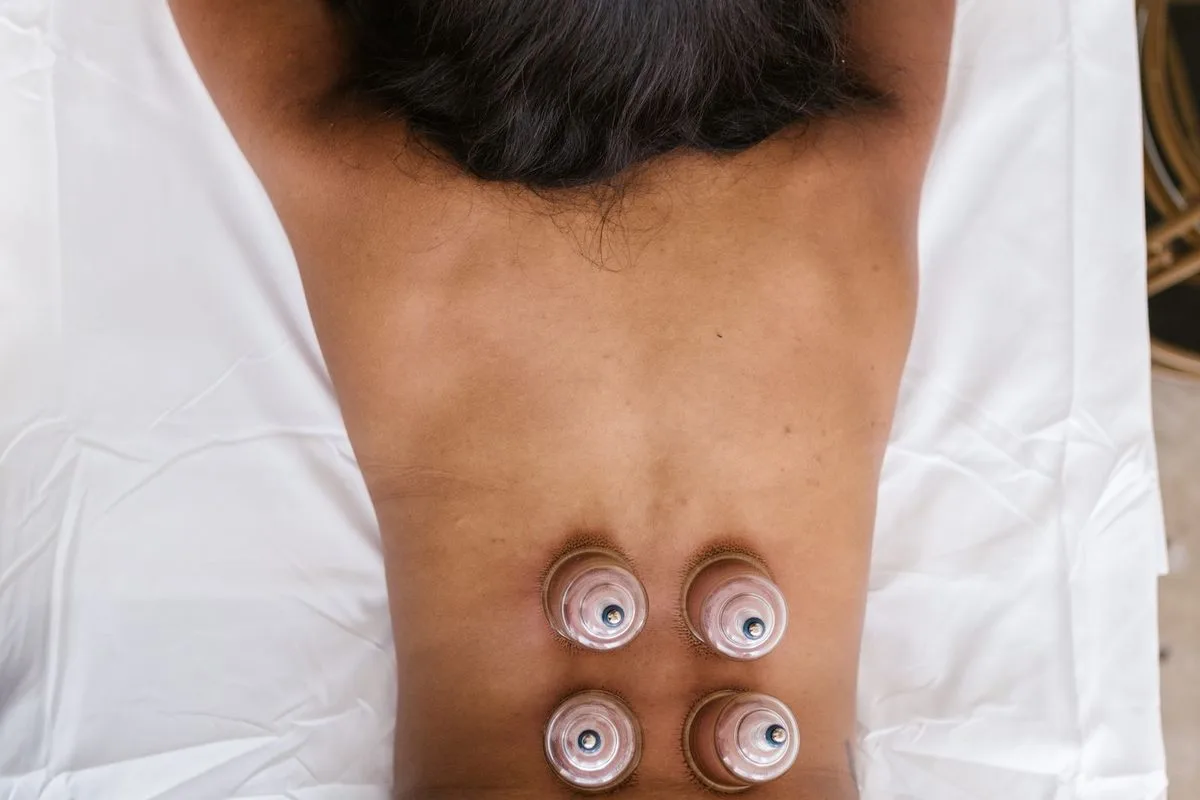
Cupping therapy is a hands-on treatment that uses suction cups to lift and decompress soft tissue, releasing muscle and fascial tension and drawing fresh blood into a restricted area.
If your muscles stay tight no matter how much you stretch, or you feel stiff and slow to bounce back between hard training days, cupping therapy may be the piece your recovery is missing. It is one of the soft tissue tools we use at Carolina Performance Chiropractic to loosen stubborn tension and get blood moving through overworked tissue.
Cupping therapy, also called myofascial decompression, uses suction cups placed on the skin to gently lift the tissue underneath. That is the opposite of a massage, which presses down. The negative pressure draws blood to the area and creates space between the layers of muscle and fascia, which helps release restriction, improve circulation, and reduce the tightness that limits how you move.
We use dry cupping, meaning the cups create suction on intact skin with nothing broken or drawn out. It is a clinical treatment aimed at a specific restriction we find during your assessment, not a spa add-on.
What It Helps
What Cupping Helps With
Because cupping works on muscle and fascia and improves local blood flow, it is especially useful for the tightness and slow recovery that come with hard training and repetitive load.
- Tight, overworked muscles that will not release
- Upper back, shoulder, and neck tension
- Slow recovery between training sessions
- Fascial restriction and adhesions
- Limited range of motion from chronic tightness
- Post-workout muscle soreness
- Low back tightness and stiffness
- Calf, hamstring, and IT band tightness in runners
It is not only for athletes. The same tension builds up from desk work, stress, and old injuries. See the full list of conditions we treat.
The Marks
Those Circles Are Not Bruises
The round marks cupping can leave behind are the part people ask about most. They are not bruises and they are not a sign of damage. A bruise comes from an impact that breaks blood vessels. Cupping marks come from suction drawing blood to the surface of the skin, without any pressure or trauma to the tissue underneath.
The color tends to reflect how much tension and congestion was in the area, and it fades on its own within a few days. Not every session leaves a mark, and a darker mark is not better or worse. It is simply a normal response to the suction.
The Difference
Cupping vs. a Deep-Tissue Massage
A deep-tissue massage compresses muscle and feels good in the moment, but it works from the top down. Cupping does the opposite: it decompresses, lifting the tissue to create space and pull fresh blood into a restricted area. That is why cupping often reaches tension that pressure alone has not resolved.
In practice we rarely use cupping on its own. We combine it with Active Release Technique, muscle scraping, adjustments, and corrective exercise so the restriction, the joint, and the movement pattern are all addressed together.
| Cupping | Deep-Tissue Massage | |
|---|---|---|
| What it does | Lifts and decompresses tissue with suction | Compresses tissue with pressure |
| Best for | Fascial restriction, circulation, recovery | Broad relaxation and general tension |
| What you feel | A pulling, stretching sensation | Firm downward pressure |
Why Here
Why Get Cupping at Carolina Performance Chiropractic
Cupping is only as useful as the assessment behind it. Rather than cup wherever it feels tight, Dr. Cade Sapala finds the tissue actually driving your restriction and treats it as part of a plan to get you back to training and keep you there. As a triathlete, he treats recovery the way an athlete thinks about it, not as a luxury but as part of training. Learn more about Dr. Sapala.
Questions
Frequently Asked Questions
No. Most people describe it as a firm pulling or stretching sensation rather than pain. The cups stay on for a few minutes or are moved across the tissue, and it should feel like a release, not something you have to endure.
No. A bruise comes from an impact that breaks blood vessels. Cupping marks come from suction drawing blood to the surface of the skin, with no pressure or trauma underneath. They are painless and fade on their own within a few days.
The suction lifts the tissue, creating space between layers of muscle and fascia and drawing fresh blood into the area. That helps release restriction, ease tightness, and support recovery in muscle that has been overworked.
Cupping is commonly used for muscle tension and pain, and research suggests it can help with certain kinds of musculoskeletal pain. We use it as one part of a treatment plan rather than a cure-all, and we are honest about what it can and cannot do.
It depends on your goals. Some patients use it as part of ongoing recovery during heavy training blocks, others only while working through a specific area of tightness. We give you a realistic plan after your assessment instead of selling a set package.
For most people, yes. We use dry cupping on intact skin, and we review your health history first. It is not appropriate for certain skin conditions or medical situations, which is why an evaluation comes first.
Sources
References
- National Center for Complementary and Integrative Health (NIH). Cupping.
- Healthline. Cupping Therapy: What It Is, Benefits, and Side Effects.
This page is for education and does not replace an individual evaluation by a licensed provider.