

The Basics
What Assisted Stretching Is
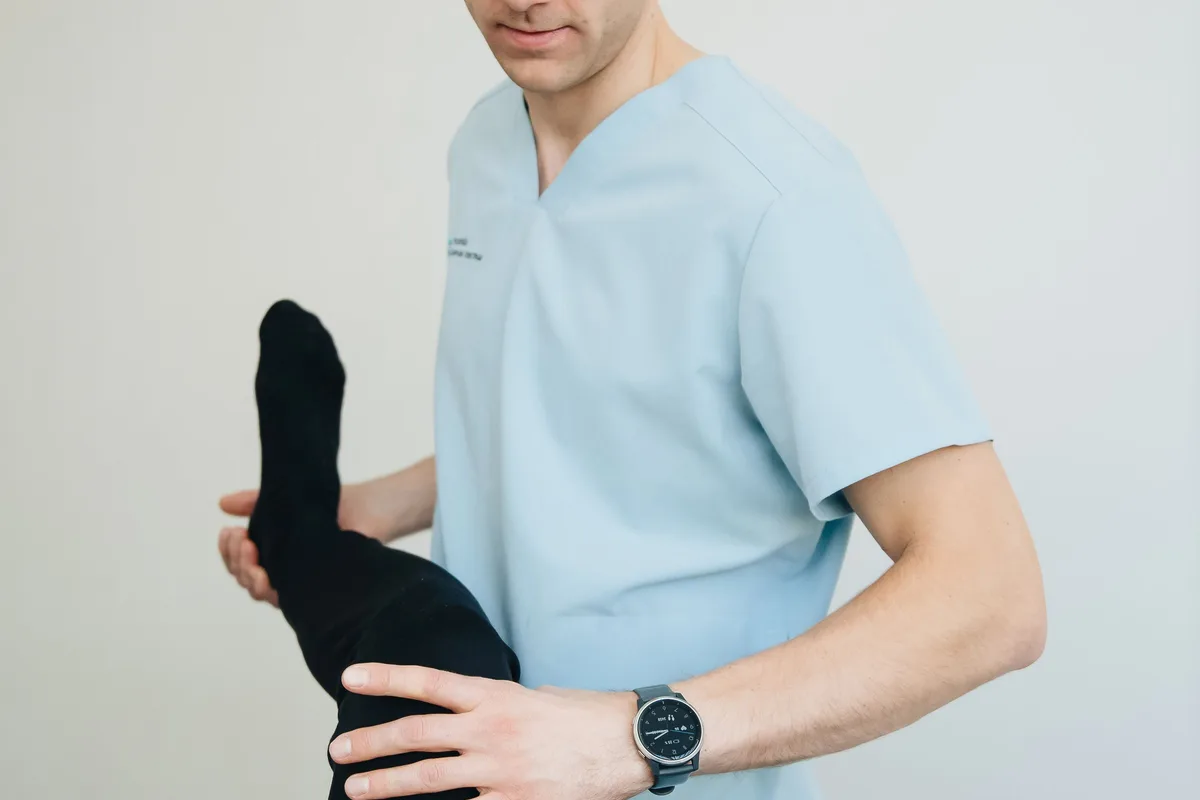
Assisted stretching means a second person moves the joint through range while you relax, holding positions you cannot hold on your own and controlling the depth precisely. Done here, it starts with working out why the tissue is short, because tightness is a symptom and it usually has a cause worth finding.
Most of what limits range is not the muscle simply being short. It is the nervous system deciding a range is unsafe and holding tension to protect it. That is why stretching harder often makes something feel tighter the next day, and why the same hamstring stays tight for years no matter how much time you spend on it.
The Technique
What PNF Actually Is
PNF stands for proprioceptive neuromuscular facilitation, which is a long name for something straightforward. The muscle is taken to the edge of its comfortable range. You then push gently against resistance for a few seconds, so the muscle contracts while its length stays the same. Then you relax, and the limb moves a little further into the new range.
That contract and relax cycle is the whole trick. Asking a muscle to work at the end of its range changes how the nervous system regulates tension there, and the range gained tends to be greater in a single session than static holding produces. Reviews of stretching methods in rehabilitation have consistently placed PNF at or near the top for acute gains in range of motion.
Two practical points. It needs a second person, because you cannot brace properly against your own limb, which is the main reason this is done in a clinic rather than at home. And the range you gain is temporary unless you use it. Gaining twenty degrees of hip rotation and then sitting on it for a week gives most of it back, which is why sessions here finish with something that loads the new range.
The Difference
How This Differs From a Stretch Studio
Stretch studios have grown quickly and they do a genuinely good job of what they are built for, which is a consistent, relaxing, repeatable session. This is a different thing, and it is worth being clear about which one you want.
| Here | Stretch studio | |
|---|---|---|
| Starts with | An assessment of why the range is limited | A stretching session |
| Delivered by | A Doctor of Chiropractic | A trained stretch practitioner |
| If stretching is not the answer | We treat the actual restriction, or refer | Stretching is the service |
| Joint or nerve restriction | Within scope | Outside scope |
| Best for | Something specific that is not resolving | General maintenance and recovery |
If your hamstrings are simply tight and you want them worked on regularly, a studio is a reasonable option. If the same side keeps tightening, or the tightness came with pain, or it has not shifted in months, the useful question is what is driving it. That is where this starts.
Who It Helps
Who This Works Well For
- Runners and triathletes with hips, hamstrings, or calves that keep locking up in training. Often paired with the work on running injuries.
- Golfers losing rotation through the hips and thoracic spine, which shows up in the swing before it shows up as pain. See golf performance.
- Desk workers with short hip flexors, a stiff upper back, and a neck that aches by the afternoon.
- Lifters who cannot reach positions their training demands, like depth in a squat or a stable overhead position.
- Anyone whose own stretching is not working, which is usually a sign the restriction is not where they think it is.
What Happens
What a Session Looks Like
We start by measuring what the joint actually does, and by working out whether the limit is muscular, joint related, or the nervous system protecting something. That takes a few minutes and it changes everything that follows.
From there the work is hands on. PNF for the muscular restrictions, joint work where the joint itself is the limiter, and soft tissue techniques like Active Release Technique or myofascial release where tissue quality is the problem. Stretching is one of several tools, not the whole visit.
You leave with the new range loaded, meaning a couple of exercises that ask the body to use what it just gained. That is the part that makes it hold.
Mobility
Mobility and Flexibility Work
People often come in asking about stretch therapy or fascial stretch therapy, which target the same restrictions through the fascia and the muscle. What happens here is practitioner-assisted stretching using PNF, applied after an assessment rather than as a fixed routine, so the session goes after whatever the assessment actually found.
Worth separating two words that get used interchangeably. Flexibility is how far a joint can be moved. Mobility is how far you can move it yourself, with control. The gap between the two matters, because range you cannot control is range you will not use, and in some cases it leaves a joint less stable than it was.
So the work does not stop at gaining range. If your hip can be taken to a position you cannot reach under your own power, the next step is building strength through that range, which is closer to corrective exercise than to stretching. Most people need some of both, and the balance depends on what the assessment shows.
Questions
Frequently Asked Questions
There is overlap, but the goal is different. A stretch studio is built around delivering a consistent, relaxing session. Here it starts with an assessment. We look at how the joint moves, whether the restriction is muscle, joint, or nerve related, and then use stretching as one tool among several. If stretching is not the right answer for what you have, we will say so rather than sell you a package of it.
PNF stands for proprioceptive neuromuscular facilitation. In practice it means you contract the muscle against gentle resistance for a few seconds, then relax while it is taken into a slightly deeper range. That contract and relax cycle works with the way the nervous system regulates muscle tension, and it generally produces more range in a single session than simply holding a stretch does. It needs a second person, which is why it is difficult to do well on your own.
It should feel like a strong stretch rather than pain. PNF asks for brief effort from you during the contract phase, so it is more active than lying there being stretched. If something is sharp or reproduces your symptoms, we stop and reassess, because that usually means the tightness is protective rather than structural.
For a specific restriction, a short block of visits alongside work you do at home tends to be enough. Ongoing sessions make sense for athletes in heavy training, or for people whose work keeps putting them back into the same position. We would rather give you something that holds than book you in indefinitely.
We can, but it is worth five minutes of assessment first. Chronic tightness is often a muscle working overtime to protect something else, and stretching it harder can make it grip more. Knowing which one you are dealing with changes what actually helps.
No. Desk workers are some of the best candidates, because sitting shortens the hip flexors and loads the neck and upper back in a predictable way. The approach is the same, the targets are just different.
Sources
References
- Page P. Current concepts in muscle stretching for exercise and rehabilitation. International Journal of Sports Physical Therapy, 2012.
- Harvard Health. The importance of stretching.
This page is for education and does not replace an individual evaluation by a licensed provider.