

Start Here
What Is Actually Causing It
The large majority of lower back pain is what clinicians call non-specific, meaning it comes from the joints, muscles, and connective tissue of the back rather than from a single identifiable structure that would show on a scan. That sounds like a shrug and it is not. It is the category that responds best to treatment, and it is the reason a hands on approach plus the right exercise works as well as it does.
What usually sits behind it is some combination of segments in the lower back that have stopped moving well, muscles that have tightened around them to protect the area, and a back that has been asked to tolerate more load than it is currently conditioned for. Those three feed each other, which is why back pain so often arrives without a dramatic injury behind it.
The useful distinction at the first visit is whether this is mechanical back pain or whether a nerve is involved. Pain that stays in the back and buttock is one thing. Pain travelling down the leg with numbness or weakness is sciatica, and it is managed differently.
Treatment
The Techniques Used for Lower Back Pain
Four things, usually in combination, and the balance between them is decided by the examination rather than by routine.
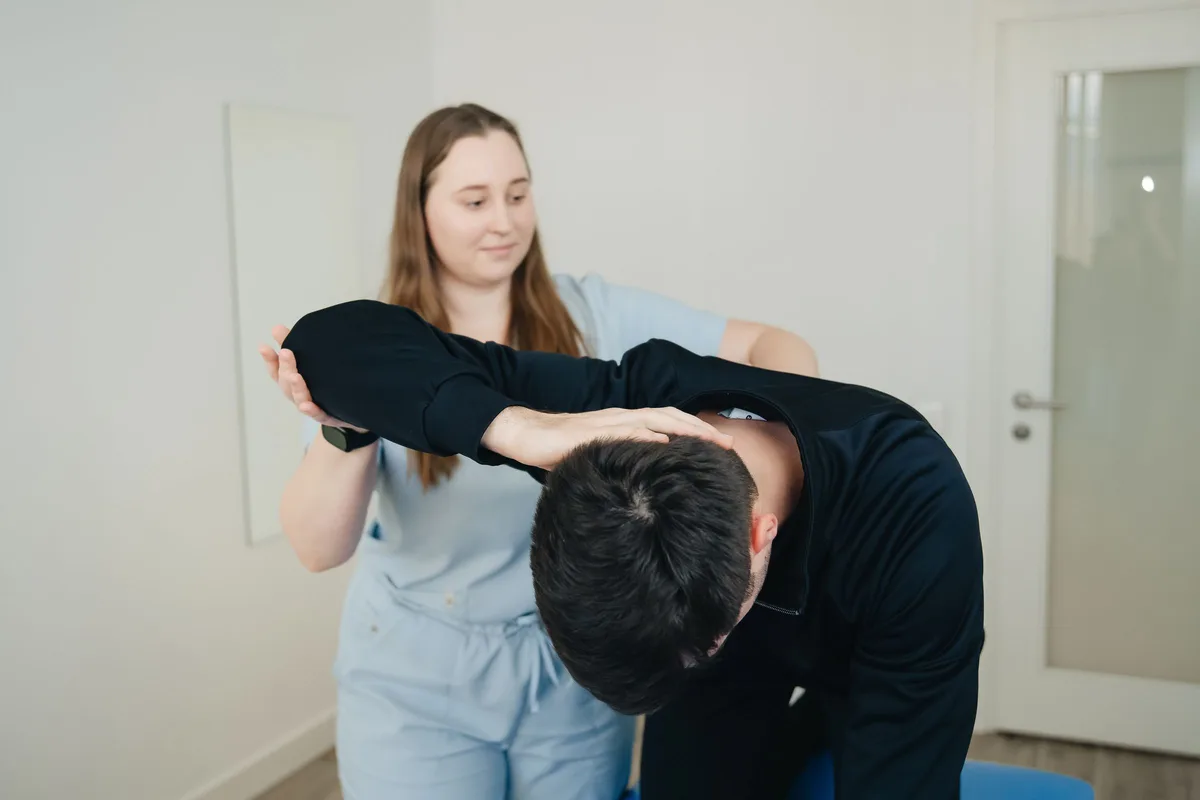
- Spinal adjustment and mobilisation. Restoring movement to the segments that have stiffened. Where a case is irritable, lower force mobilisation is used instead of a thrust technique. More on how adjustment works.
- Soft tissue work. The muscles around a painful back guard and tighten, and that guarding outlasts the original problem. Active Release Technique, myofascial release, and instrument assisted work address that directly.
- Loaded exercise. The part that decides whether the result holds. A back that is not conditioned for what you ask of it will keep complaining, so specific exercise is not an optional extra here.
- Practical guidance. How you sit, lift, and train between visits determines whether treatment compounds or gets undone twice a week.
People often arrive expecting only the first of those. The first one usually produces the fastest relief, and the third is what stops you needing it again in four months.
The Evidence
What the Guidelines Actually Recommend
This is worth knowing because it is not a chiropractic body making the case. In 2017 the American College of Physicians, which is a body of medical doctors, published its guideline for low back pain. For acute and subacute cases it recommends that clinicians treat with non-drug therapies first, and it names superficial heat, massage, acupuncture, and spinal manipulation among them. Medication is positioned as the fallback if drug therapy is wanted, not the starting point.
For long standing low back pain the same guideline puts exercise, rehabilitation, and similar non-drug approaches first, with medication only after an inadequate response to those.
So the approach used here is not an alternative to mainstream medical advice for back pain. For most presentations it is what mainstream medical advice recommends trying first.
Imaging
Do You Actually Need a Scan
For most ordinary back pain, no, and the evidence on this is unusually consistent. Routine early imaging does not improve outcomes, and it carries a specific downside that is worth understanding.
Disc bulges and degenerative changes are extremely common in people with no back pain whatsoever, and they become more common with every decade of life. So a scan taken early will frequently show something, that something will often have nothing to do with why you hurt, and the result can be worry and treatment aimed at a finding that was never the problem.
Imaging earns its place when there are red flag symptoms, when there is genuine and progressive neurological loss, or when a sensible course of conservative care has not shifted things. In those situations it is important and you will be told so.
The Visit
What Happens at Your First Visit
History first, and the specifics matter: when it started, what you were doing, what makes it better or worse, whether sitting or standing is the problem, and whether anything travels into the leg.
Then examination. How the lower back and hips move, which segments are restricted, which tissue is tender and whether pressing it reproduces your pain, plus neurological screening where anything suggests nerve involvement. That is also the screen for the small number of presentations that belong with a physician.
You leave the first visit with treatment, a couple of things to do at home, and an honest view of how long this should take.
Timeframe
How Long It Takes
Most acute episodes improve substantially within two to six weeks. Treatment tends to shorten that and make the middle of it more bearable, and the exercise side is what reduces the chance of the next episode.
Recurrence is common with back pain, and anyone who tells you otherwise is selling something. That is not a reason for pessimism, it is the reason the plan includes what you do between and after visits rather than only what happens on the table.
Right Now
What Helps Before Your Visit
- Keep moving. Gentle, frequent movement beats rest for almost all back pain, and prolonged bed rest actively slows recovery.
- Walk. Short and often is better tolerated than one long effort, and it is usually the easiest way to keep moving without aggravating things.
- Ice early, heat later. Ice for a fresh flare, heat once it is older and feels stiff. Ten minutes at a time either way. See ice or heat.
- Break up sitting. Sitting loads the lower back more than standing, and long stretches of it are the most common aggravator.
- Do not chase a perfect posture. Changing position often matters more than holding one ideal position.
Know the Limits
When Back Pain Is Something Else
A small number of presentations need medical assessment rather than conservative care. Seek medical attention promptly for:
- Loss of bladder or bowel control, or numbness through the groin, buttocks, or inner thighs. This needs an emergency department the same day.
- Weakness in a leg or foot that is getting worse.
- Back pain after a significant fall, collision, or car accident, particularly with osteoporosis or in older adults.
- Fever, unexplained weight loss, or a history of cancer alongside new back pain.
- Night pain that will not settle in any position.
These are uncommon, and the overwhelming majority of back pain is not this. Screening for them is simply part of a proper first visit.
Questions
Frequently Asked Questions
Four things, usually in combination. Spinal adjustment or mobilisation to restore movement to segments that have stiffened up. Soft tissue work on the muscles around the area that have tightened in response, often with Active Release Technique or instrument assisted work. Specific exercise to load the area properly, which is the part that decides whether the result lasts. And practical guidance on positions, lifting, and activity so you are not undoing the treatment between visits. Which of those dominates depends on what the examination finds.
For most mechanical low back pain, care here helps and helps reasonably quickly. Whether it is fixed permanently depends on what caused it. Pain from a stiff, deconditioned lower back that has been loaded badly tends to respond well and stay resolved if you keep up the exercise. Pain that keeps returning because of how you sit, lift, or train for forty hours a week will keep returning until that changes, and treatment alone will not do it.
For most people, no, and certainly not at the start. Guidelines are consistent that routine early imaging does not improve outcomes for ordinary low back pain. It also frequently finds disc bulges and degenerative changes that are present in large numbers of people with no pain at all, which can lead to worry and treatment nobody needed. Imaging is appropriate when there are red flag symptoms, real neurological deficit, or when several weeks of sensible care have not moved things.
The noise itself is harmless. It is gas releasing from the fluid in the joint, not bones grinding or anything moving out of place. What matters is not the sound but whether the right joint is being treated and whether the technique suits your presentation. Plenty of people are treated effectively without any audible release at all, and where a case is irritable, lower force techniques are usually the better choice.
For a straightforward episode, a short course over a few weeks alongside exercise you do at home is normally enough, and you should notice a difference well before the end of it. Long standing pain takes longer. What you should not accept from anyone is an open ended plan booked months ahead before they know how you respond, and you will get a realistic estimate here after the first visit.
Ice for the first couple of weeks or for a fresh flare, heat once it is older than that and feels stiff rather than sharp. Ten minutes at a time either way, because longer is not better. There is more detail on the ice or heat page, including why the length of the application matters more than which one you pick.
The distribution tells you. Pain that stays in the lower back and buttock is usually mechanical low back pain. Pain that travels down the leg, especially below the knee, and comes with numbness, pins and needles, or weakness, points toward nerve involvement and is treated somewhat differently. The sciatica page covers that in detail.
Sources
References
- American College of Physicians. Guideline for treating nonradicular low back pain, 2017.
- Cleveland Clinic. Lower Back Pain.
- AAOS OrthoInfo. Low Back Pain.
This page is for education and does not replace an individual evaluation by a licensed provider.